
our approach aimed at maximizing productivity & efficiency.
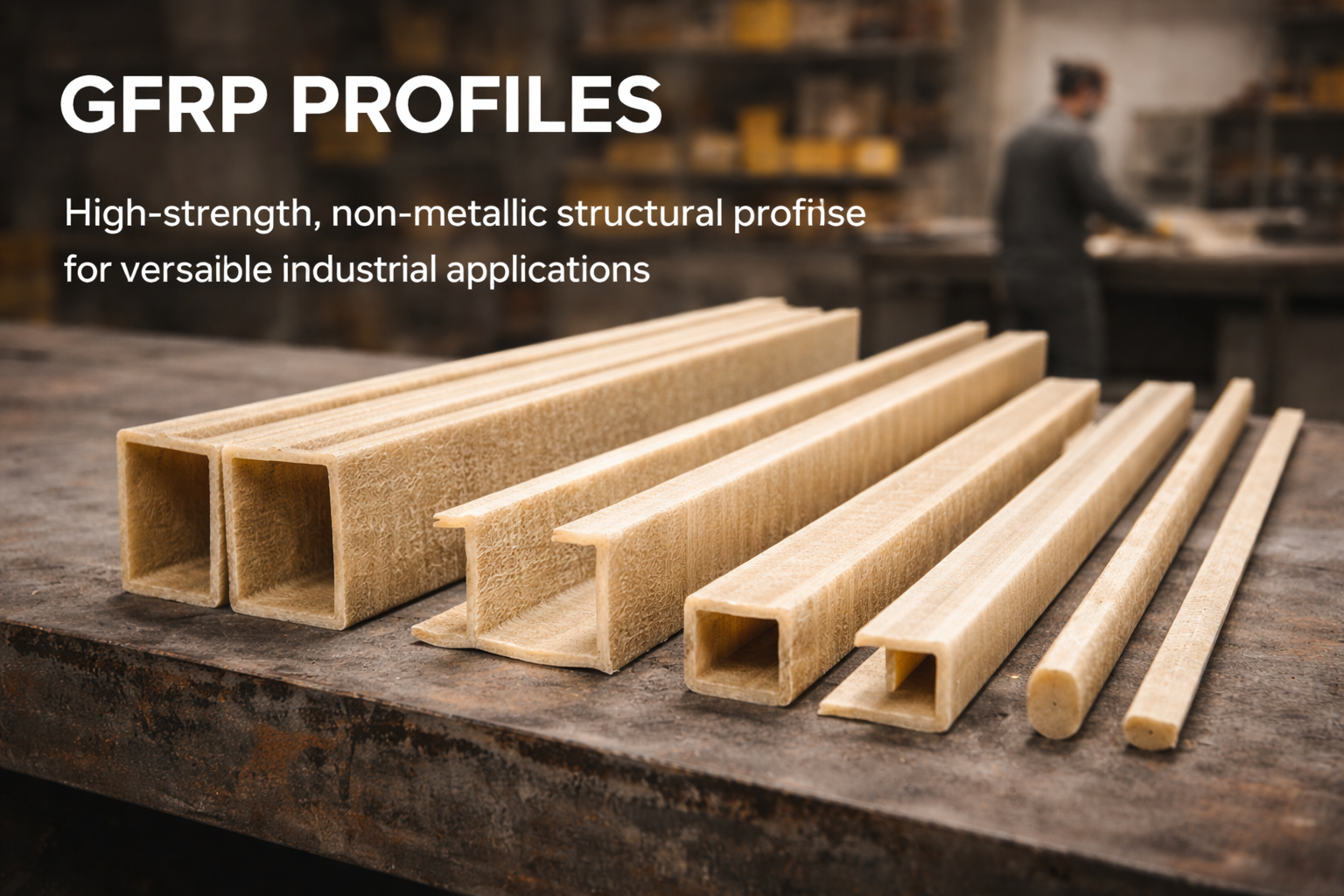
GFRP Profiles Manufacturer
Founder, Avada Factory Inc.
service related FAQ’s
On-site cutting can be done using carbide or diamond-coated blades, which are specifically designed to handle the high strength and durability of GFRP rebar or reinforcement bars like Titan Bar (GFRP). Low speed of cutting is recommended for cleaner cuts.
FRP (Fiber Reinforced Polymer) and GFRP (Glass Fiber Reinforced Polymer) are both types of composite materials commonly used in construction, engineering, and various other industries due to their high strength, lightweight, and corrosion-resistant properties. Here’s a breakdown:
FRP (Fiber Reinforced Polymer):
- Definition: FRP is a composite material made by reinforcing a polymer matrix with fibers, which can be made from various materials like glass, carbon, or aramid.
- Components: The polymer (often a resin) acts as the matrix or binder, holding the fibers together and transferring load among them. The fibers, in turn, provide the composite with strength and rigidity.
- Properties: FRP materials are strong, lightweight, and highly resistant to corrosion, making them suitable for environments where traditional materials like steel might corrode or deteriorate.
- Applications: FRP is widely used in construction, aerospace, automotive, and marine industries due to its durability and versatility.
GFRP (Glass Fiber Reinforced Polymer):
- Definition: GFRP is a specific type of FRP that uses glass fibers as the reinforcement material.
- Properties: Glass fibers give GFRP a unique combination of strength, flexibility, and light weight. GFRP also has excellent corrosion resistance, which makes it especially useful for structures exposed to moisture, chemicals, or salt.
- Applications in Civil Engineering: GFRP is frequently used in construction as rebar (reinforcing bar) for concrete structures, especially in harsh environments such as coastal or marine infrastructure, bridges, tunnels, and roadways. Its durability and longevity make it a cost-effective alternative to steel in many cases.
Overall, both FRP and GFRP are valued for extending the life of structures and reducing maintenance costs, especially in demanding environments.
While certain care must be taken while storing Titan Bar (GFRP) on site, it is easy.
- DO NOT store Titan Bar (GFRP) in direct sunlight for longer period. ALWAYS store in shade. Whereas, storing GFRP rebars under rain has no effect as the material does not corrode
- DO NOT drag Titan Bar (GFRP) on ground or across sharp edges.
- ALWAYS use proper hoisting equipment and multiple lifting points when handling linear (for size 12mm and above), non-linear and bent Titan Bar (GFRP)
Products made of glass fibre reinforced polymer have a high durability and can withstand many years without compromising their structure. Polymers age very slowly, In addition, external influences such as humidity, heat or UV rays hardly deteriorate their properties and they are extremely resistant in aggressive environments.
We manufacture and supply Titan Bar (GFRP) of diameters 4, 6, 8, 10, 12, 16, 20, 25 and 32mm.