Exporting & Packaging Guidelines | Titan Technovators
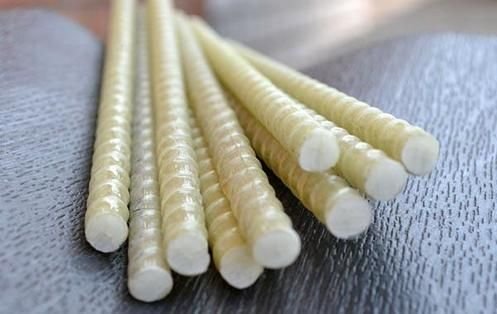
As global construction shifts toward non-corrosive materials, Indian manufacturers are positioned at the forefront of the Glass Fiber Reinforced Polymer (GFRP) supply chain. However, supplying GFRP rebar to overseas markets like North America, Europe, the Middle East, and Australia requires more than just meeting local manufacturing standards.
Exporting composite materials across long ocean routes involves rigorous compliance, international quality certifications, and heavy-duty ocean packaging. At Titan Technovators, we adhere to strict quality assurance and packaging protocols to ensure our GFRP rebars arrive at overseas job sites in peak structural condition.
1. Quality Standards & Certifications for International Acceptance
Exporting GFRP rebar from India requires meeting specific target-country structural codes. Overseas structural engineers will not accept composite reinforcement without verified, independent mill test reports (MTCs).
Critical International Quality Specifications
- ASTM D7957 / ACI 440.11:
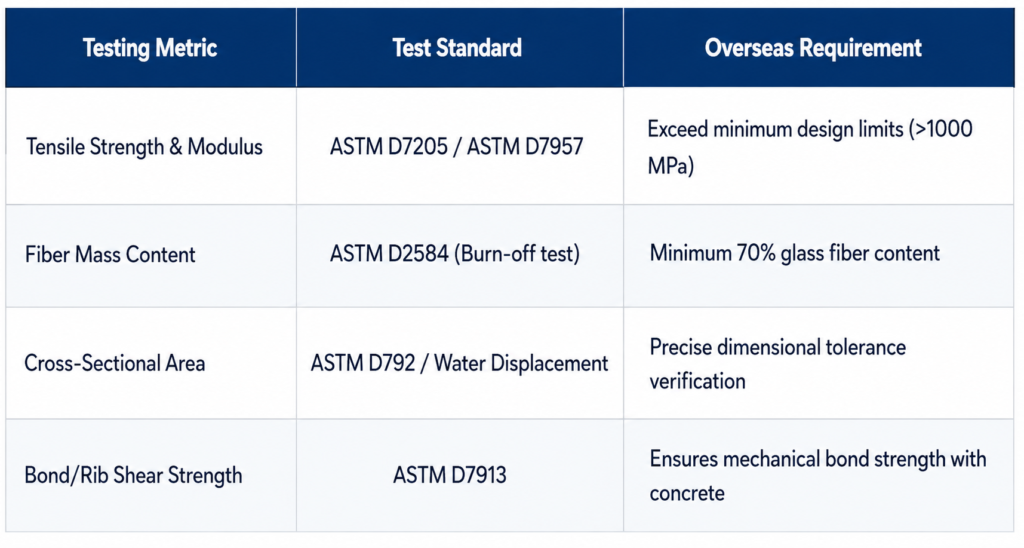
The benchmark standard for solid round GFRP rebars in North America and much of the Middle East. It mandates minimum ultimate tensile strength, guaranteed modulus of elasticity, and fiber volume fraction (>70%). - ISO 10406-1:
Governs test methods for Fiber Reinforced Polymers (FRP) used in concrete reinforcement across European and Asian markets. - Alkali Resistance Testing (ASTM D7705):
Because concrete is an alkaline environment, export batches must undergo accelerated aging tests to prove long-term durability in high-pH conditions. - Glass Transition Temperature (Tg):
Tg testing via Differential Scanning Calorimetry or DMA ensures the resin matrix will not degrade or soften under high ambient temperatures during transit or installation in warm climates.
Pre-Shipment Quality Testing Checklist
Every export consignment leaving the manufacturing facility should undergo batch-level quality verification.
2. Export Packaging Protocols: Protecting Composites for Ocean Transit
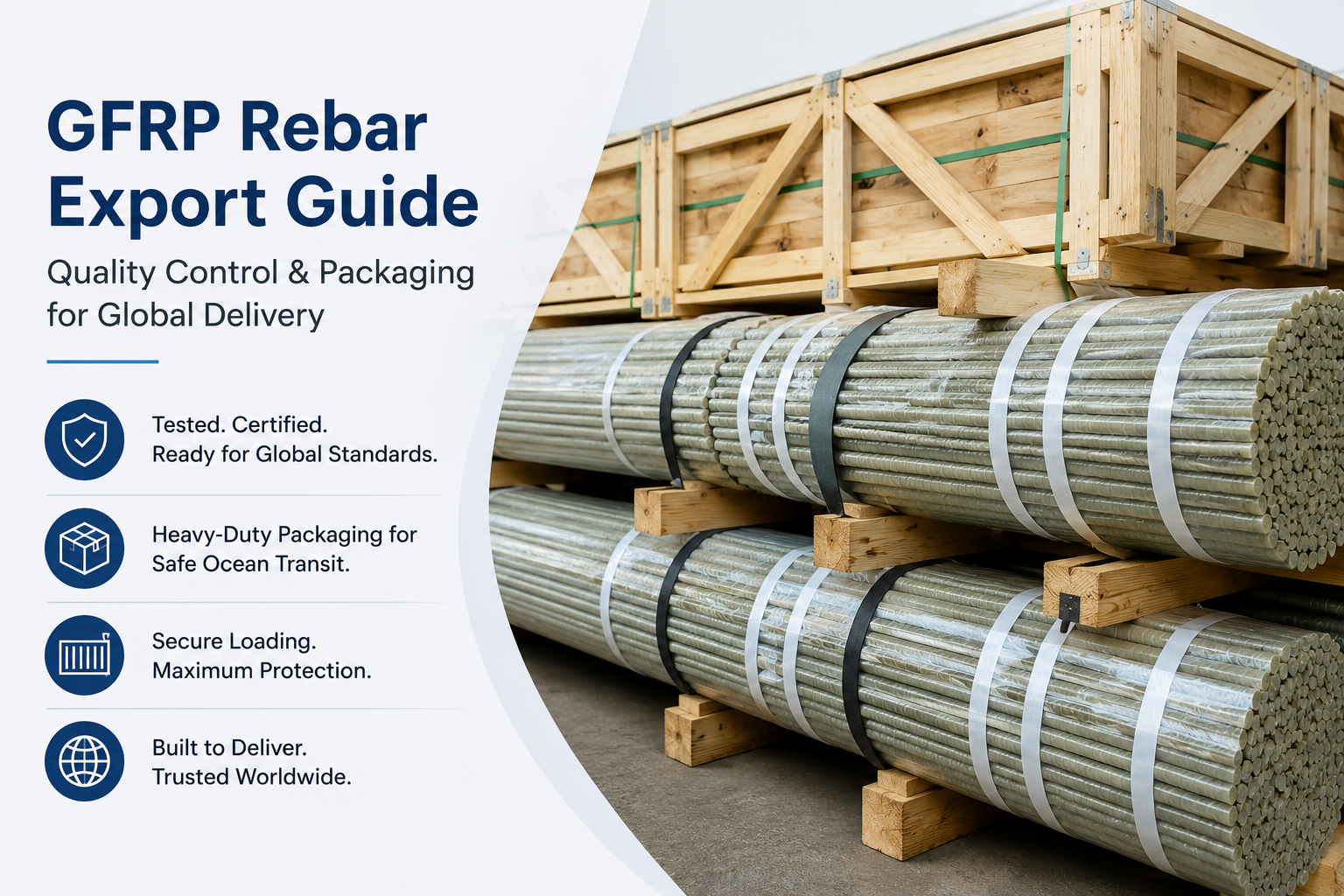
While GFRP is immune to rust, it is sensitive to surface abrasion, extreme UV exposure during deck storage, and impact shear during container loading and unloading. Export packaging must be engineered specifically for composite handling.
Bundle Strapping & Sheathing
- Non-Metallic Strapping:
Never use raw carbon steel bands to bundle GFRP rebars. Steel bands can bite into the surface resin profile under tension, creating micro-cracks or stress concentrations. Use high-tensile polyester (PET) strapping or heavy-duty woven polypropylene bands. - Neoprene / Rubber Padding:
Place thick neoprene or rubber pads under every strapping point to protect the sand-coated or helical wrap surface profile of the rebars. - UV Protective Shrink-Wrapping:
Prolonged exposure to sunlight during yard storage or open-top shipping degrades the resin matrix. Bundles should be completely encased in heavy-gauge, UV-stabilized polyethylene shrink film or woven polypropylene sleeves.
Wooden Crating & Palletization (ISPM 15 Compliance)
- Heat-Treated Timber (ISPM 15):
Overseas customs regulations require all wooden dunnage, crates, and skids originating from India to be heat-treated (HT) and stamped with ISPM 15 marks. Using untreated wood results in shipment quarantine or rejection at destination ports. - Full-Length Support Skids:
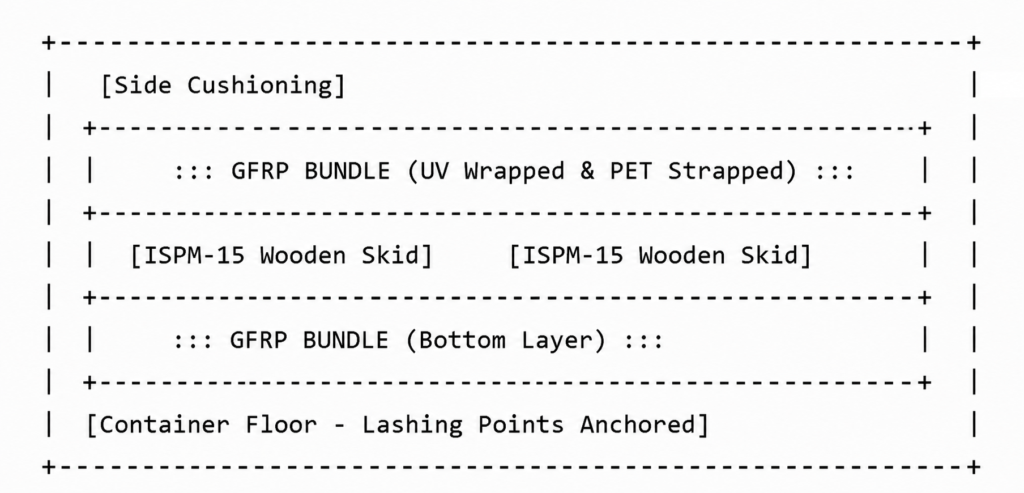
Unlike steel, which can withstand bending, long bundles of GFRP rebar flex significantly. Bundles must be supported on rigid wooden skids spaced every 1.5 to 2.0 meters along the full length to prevent permanent bowing during ocean transit.
3. Container Loading & Maritime Logistics
Maximizing cargo volume while ensuring structural integrity inside the container is key to maintaining export margins.
Key Rules for Containerizing GFRP Rebar
- Straight Bar Length Optimization:
Standard 20ft containers accommodate lengths up to 5.8 meters, while 40ft High Cube (HC) containers fit up to 11.8-meter straight bars. Bars exceeding 11.8 meters must be bent into factory-formed shapes (if permitted by design) or shipped via breakbulk/open-top containers. - Weight vs. Volume Balance:
Because GFRP is 75% lighter than steel, containers will max out on cubic volume before reaching gross container weight limits. Ensure bundles are packed tightly to prevent movement while utilizing container height safely. - Internal Lashing & Dunnage Bags:
Use heavy-duty polyester lashing straps anchored to the container’s internal tie-down rings. Install inflatable dunnage air bags between bundle stacks to prevent lateral sliding during rough sea conditions.
4. Documentation & Customs Compliance
Delays at destination ports increase demurrage costs and jeopardize project schedules. Every overseas shipment must include a complete quality and shipping dossier.
- Mill Test Certificates (MTC):
Traceable to the specific raw material batch (glass fiber roving and resin system). - Certificate of Origin (COO):
Issued by authorized chambers of commerce in India to clear tariff classifications. - ISPM 15 Phytosanitary Certificate:
Validating heat treatment of all wooden packaging. - HS Code Alignment:
Ensure correct international classification under composite materials (HS Code: 7019 series for glass fiber products).
The Titan Technovators Commitment
Exporting GFRP rebar requires precision at every step—from pultrusion manufacturing and laboratory testing to ISPM-certified packaging and container lashing. At Titan Technovators, our rigorous quality control and export packaging protocols ensure that our overseas partners receive world-class composite reinforcement, ready for immediate site installation anywhere in the world.
Contact Us
India Office
425, Kalasagar Shopping Hub, Near Satadhar Cross Road, Ghatlodia, Ahmedabad 380061, Gujarat, India
P: +91 63 5454 8738
E: info@titantechnovators.com
Manufacturing
At Po Bavlu, Thol, Ta-Kadi, Dist Mehsana, Gujarat, India
P: +91 63 5454 8738
Canada Office
Thomas Avenue, Brantford, Ontario, N3S0E2, Canada
P: +1 (289) 9259224
Nigeria Office
c/o. Ideate 360 Limited, 9, Bassey Akpan Street, Uyo, Akwa – Ibom State, Nigeria
E: nigeria@titantechnovators.com
about
Titan Technovators
At Titan Technovators, we embarked on our journey with a simple yet powerful idea: to provide sustainable solution to the Construction Industries.